
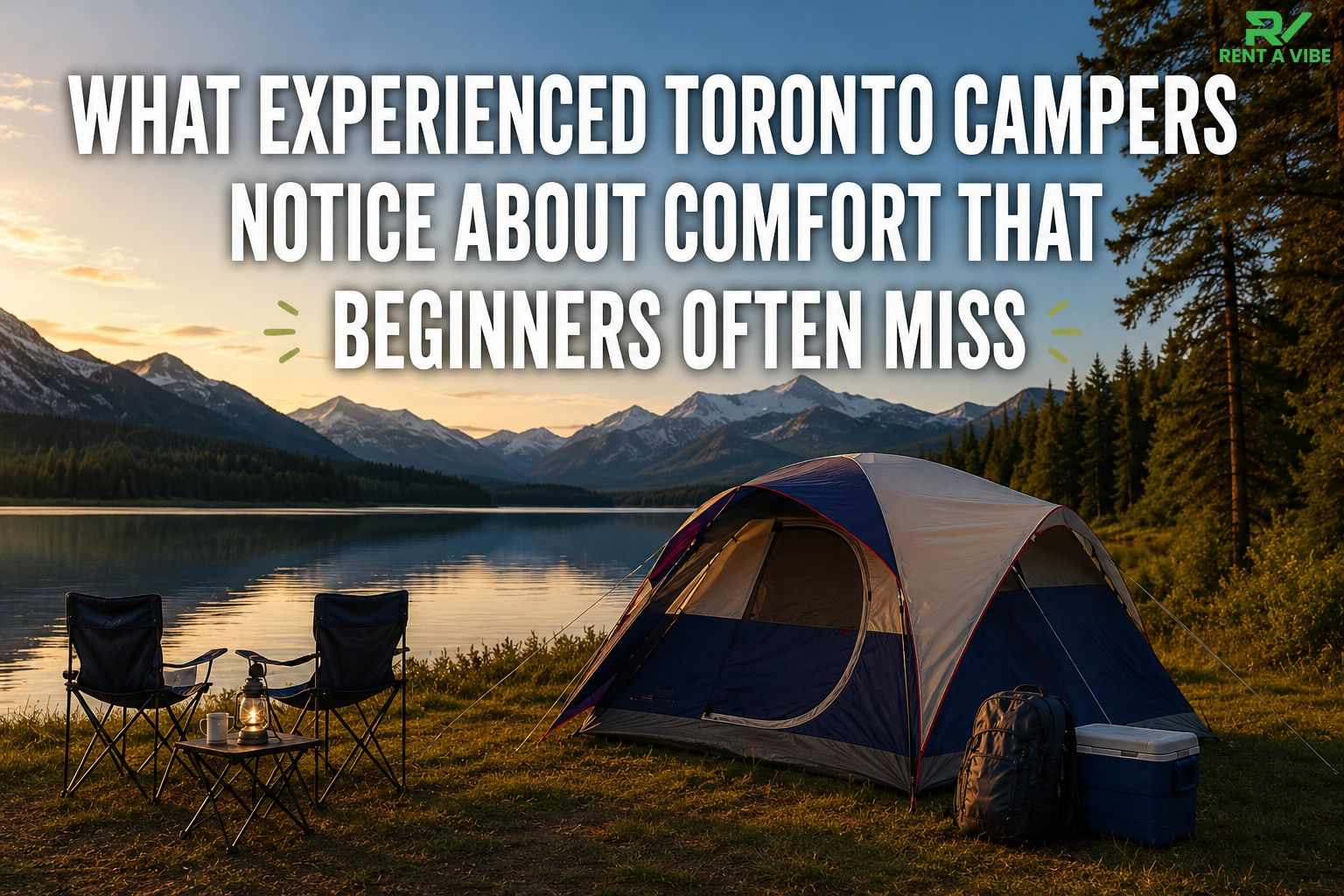
Everyone thinks camping comfort is about buying more stuff: a bigger tent. A fancier sleeping bag. Some gadget you saw on Instagram. Honestly? That's not really it.
I've hung around enough campsites to notice a pattern. The people who look relaxed, who aren't fighting their gear at 11 pm in the dark, aren't the ones with the most expensive setup. They're just smarter about it. They've picked their spots, not their price tags.
If you're looking at reliable camping gear rental in Toronto, this actually works in your favour. You're not stuck with gear you bought once and never really learned. We see this a lot; people rent instead of buy because it forces them to think about what they actually need for this trip, not some imaginary future trip.
1. Experienced Campers Pay Attention to Sleeping Comfort First
Beginners spend all their planning energy on daytime stuff, hikes, games, food, and barely think about sleep. Big mistake. One rough night out there and the whole next day just feels off. You're cranky, cold, tired, and suddenly none of the fun stuff matters as much.
Experienced campers get this. Sleep basically decides how the whole trip goes, so they actually plan around it instead of winging it.
Here's what they pay attention to:
Tent size: enough room for people and gear without everyone's elbows touching. Cramped tents ruin sleep fast.
Sleeping gear: the right bag and pad for the season — not just whatever was sitting in the garage.
Weather protection: can the setup handle a cold snap, some rain, or wind picking up overnight?
Moisture control: nobody talks about this enough, but a damp sleeping bag at 4 am is miserable.
Organization: keep stuff off the sleeping area so it doesn't turn into a cluttered mess by night two.
2. More Gear Does Not Always Mean More Comfort
A lot of beginners think packing more stuff automatically makes camping easier. Sometimes yeah, it does. But a lot of the time it just creates a new problem: now you've got too much gear to actually manage.
Experienced campers think differently. They focus on camping gear essentials, not "bring everything just in case."
They ask themselves:
Will I actually use this?
Does it make things more comfortable?
Is it solving a real problem, or just taking up space?
A car packed to the roof doesn't mean a better trip. Honestly, it's usually the opposite. More stuff means more setup, more packing, more stuff to lose track of, more stress.
3. Campsite Organization Makes a Bigger Difference Than Beginners Expect
One thing experienced campers notice quickly is that campsite layout matters. A messy campsite creates small frustrations throughout the day.
Nobody wants to search through multiple bags for a flashlight at night or move equipment around every time someone needs something.
A comfortable campsite usually has designated areas for:
Sleeping equipment
Cooking supplies
Food storage
Relaxation
Personal belongings
Good organization saves time and reduces unnecessary stress.
This is especially important for families. Children usually bring extra clothing, activities, snacks, and personal items. Without a simple system, the campsite can become cluttered quickly.
4. Comfort Depends on Preparing for the Environment
One of the biggest differences between beginners and experienced campers? How they pick their actual spot. Beginners see a flat patch of grass and go "yep, here." Experienced campers look a little closer.
They're checking:
Ground conditions
Wind direction
Shade
How close facilities are
What the weather's doing
Here's the thing nobody tells you: a spot that looks amazing at 3 pm can feel totally different by 9 pm.
That shady little dip you loved? Might be the first place water pools when it rains. That open, sunny patch with the nice view? Brutal by noon in July, no shade anywhere. And a spot that seemed fine at first can turn into a wind tunnel right when you're trying to cook dinner.
5. Experienced Campers Choose Equipment Based on Practical Needs
Not every camping trip requires the same setup. A weekend family trip is different from a longer outdoor adventure. A summer campsite stay is different from a cooler-season trip.
This is why experienced campers focus on practical camping gear choices instead of simply choosing the most expensive equipment available.
They consider:
Number of people attending
Trip length
Weather conditions
Available storage space
Planned activities
The "right" gear isn't some fixed list. It's whatever actually fits the trip you're going on.
6. Small Comfort Details Often Create the Biggest Improvements
Beginners always start with the big stuff. Tent. Cooler. Cooking setup. Makes sense — that's what feels like "real" gear.
But experienced campers know the small stuff is what actually makes or breaks a day out there. It's the little things nobody thinks about until they're missing one.
Stuff like:
Extra lighting for after dark
Somewhere comfortable to actually sit
Storage bags so gear doesn't turn into a pile
Something under the tent to protect it from the ground
Clothing layers that match whatever the weather decides to do
Cooking supplies you can grab without digging through everything else
None of this sounds exciting before the trip. Nobody's browsing camping stores thinking "I can't wait to get my ground protector." But two days in, these are the things people are actually grateful for.
7. Experienced Campers Plan Around People, Not Just the Destination
A campsite can be gorgeous, but honestly? The trip is really about who's coming with you.
Experienced campers think about the group first, gear second. Makes sense once you think about it: camping with little kids is a completely different trip than a weekend with your buddies. Older adults usually want more comfort, less roughing it. Bigger groups need actual organization or everyone's tripping over each other by day two.
Before packing, they ask themselves:
Who's actually using this gear?
What does each person need to be comfortable?
How much space does everyone need, realistically?
What will people actually enjoy doing?
This approach helps create a smoother experience because the setup matches the people, not just the location.
8. Beginners Often Underestimate the Importance of Weather Preparation
Weather flips fast around Toronto, especially anywhere outdoors. A sunny afternoon turns into a cold evening real quick. A dry campsite turns into a mud pit after one decent rainfall.
Experienced campers plan for this. They don't just hope the forecast holds.
Their prep usually includes:
Extra clothing layers
Waterproof storage for the stuff that can't get wet
Shelter that's actually set up properly, not just thrown up
Backup lighting in case something dies
Sleeping gear that matches whatever the night actually brings, not just what the app said
9. Comfortable Camping Does Not Mean Creating a Home Away From Home
There's this idea floating around that comfortable camping means basically hauling half your house out there with you. It doesn't.
Experienced campers find a balance. And honestly, the goal was never to recreate your living room in the woods. It's about making the basics easy: sleeping, eating, staying organized — so everyone can actually relax and enjoy being outside.
A solid setup usually comes down to:
Good sleeping arrangements
Simple meals, nothing complicated
Storage that's actually organized
Some real protection from weather
Enough space to just sit and breathe
10. Experienced Campers Learn From Previous Trips
One of the biggest advantages experienced campers have isn't gear, it's memory. They remember what actually worked last time and what caused a headache.
After every trip, they tweak small stuff:
Ditching whatever didn't get used
Adding whatever they wished they'd packed
Swapping out gear that didn't cut it
Tightening up how the campsite gets organized
Beginners tend to do the opposite. First trip, and they're trying to prepare for literally every possible situation, which usually just means overpacking and overthinking.
This is actually one reason renting makes sense over buying everything upfront. With Rent A Vibe, you're not stuck with gear you bought once and regretted; you can adjust what you rent trip to trip based on what you've actually learned, instead of being locked into decisions you made before you ever set foot at a campsite.
Conclusion
At the end of the day, experienced campers know comfort isn't about having the most expensive gear sitting in your trunk. It comes down to the small decisions you make before you even leave the house, and the ones you make while you're out there.
At Rent A Vibe, this is basically our whole philosophy. Comfortable camping starts with gear that actually fits what you need; not just more gear. Get that right, and families get to actually relax, enjoy being outside, and walk away with the kind of memories that make you want to go back.
FAQs
1. What makes camping more comfortable for beginners?
Comfort comes from good preparation, proper sleeping gear, and an organized campsite. The right equipment matters more than bringing too many items.
2. Do experienced campers bring more equipment than beginners?
No. Experienced campers usually bring only useful gear that matches their trip, weather, and group size.
3. What are the most important camping gear essentials for comfort?
Essential gear includes a reliable tent, sleeping equipment, lighting, weather protection, and basic storage solutions.
4. How can families create a comfortable camping setup?
Families can improve comfort by choosing suitable gear, organizing their campsite, and planning for everyone’s needs.
5. Why do small camping items matter so much?
Small items like lighting, storage, and seating can solve common problems and make camping much easier.
6. Is expensive camping equipment necessary for a comfortable trip?
No. A comfortable trip depends more on smart gear choices and proper planning than expensive equipment.
7. How do experienced campers prepare differently from beginners?
Experienced campers plan around weather, location, and group needs instead of packing unnecessary gear.


Write a comment ...